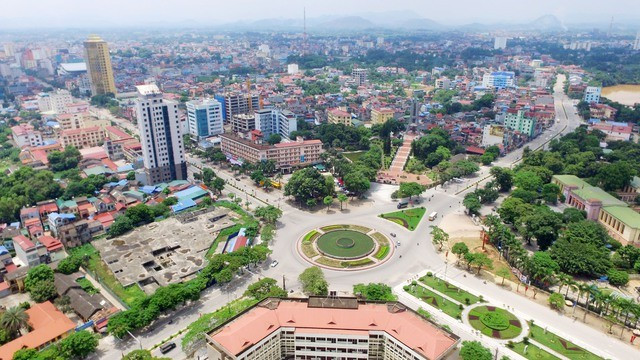
Located in the heart of the Northern Midlands and Mountainous region, Thai Nguyen holds a strategically important position, serving as a gateway connecting the northern mountainous region with the Red River Delta and as a transit point for inter-regional trade. In 2025, implementing the National Assembly’s Resolution No. 202/2025/QH15 on the rearrangement of provincial-level administrative units, which merged Bac Kan and Thai Nguyen provinces, the new Thai Nguyen province now comprises 92 communal administrative units (15 wards and 77 communes). With its characteristic hilly and mountainous terrain interspersed with valleys, a dense network of rivers and streams, and a climate characterized by varying rainfall patterns throughout the seasons, Thai Nguyen province faces a high risk and diverse range of natural disasters. Frequently occurring natural disasters include: typhoons, tropical depressions, heavy rains, floods, flash floods, landslides, land subsidence due to rain or runoff, inundation, tornadoes, lightning, hail, severe cold, frost, heatwaves, droughts, and forest fires. This highlights the urgent need to develop disaster response plan that is appropriate to the province's natural, demographic, and socio-economic characteristics.
In the context of increasingly complex climate change, proactively developing response scenarios is no longer an option but a pressing requirement to protect people's lives and property.
The urgency in the face of the severity of natural disasters
Recent years, Thai Nguyen province has faced increasingly extreme and unpredictable natural disasters. Particularly, the most serious disaster recorded occurred in October 2025, when the remnants of Typhoon No. 11 (MATMO) made landfall, causing unprecedented damage: 07 deaths and 03 injuries. Property damage was estimated at over 12,200 billion VND. This figure, manifold higher than the total losses of the previous five years (2020-2024) combined, posed a significant challenge to local response capacity. In reality, the operation of the two-tiered government system sometimes faces difficulties due to overlapping coordination or a lack of detailed response plans for the grassroots level.
In response to this situation, in 2025, Disaster Management Policy and Technology Center (DMPTC) closely coordinated with Irrigation and Disaster Prevention Department of Thai Nguyen province to review and develop disaster response plan based on disaster risk levels with a completely new approach.

The risk maps for storms, tropical depressions, and flooding in Thai Nguyen Province were compiled by DMPTC
Key new features in the Disaster Response Plan
The disaster response plan not only closely adheres to the guidelines in Decision No. 02/QD-TWPCTT dated February 18, 2020, by the National Steering Committee on Disaster Prevention and Control, but also introduces prominent updates in technology and management:
- Realistic Risk Level Updates: Based on historical and actual data from the aftermath of Typhoon No. 11 (Matmo), experts from DMPTC have reassessed all the natural disaster risk levels in the province, ensuring that the plan is no longer just on theory than closely reflects the actual developments in the locality.
- Clear assignment and delegation of responsibilities: A prominent new feature of this year's plan is the concretization of responsibilities for each party, especially the commune-level roles in commanding and mobilizing local resources according to each risk level. Commune-level authorities no longer have a passive implementation and coordination role, but have been given maximum autonomy in responding to various levels of natural disaster risks in their areas. This helps to thoroughly address the difficulties in operating the two-tiered government system, ensuring that the "four on-the-spot" principle is effectively implemented.
- Application of remote sensing imagery and digital data: The province's flood disaster risk map has been updated with 2025 flood data through satellite image processing, helping to accurately simulate high-risk areas.
- Digitizing landslide-prone areas: All vulnerable landslide-prone locations in 37 Northern and 11 Southern communes of Thai Nguyen province have been surveyed and uploaded to the Thai Nguyen Provincial Disaster Response Plan software for online monitoring (https://ungphothientai.dmptc.gov.vn/kich-ban/chi-tiet/73). This is an important prerequisite for shaping a detailed real-time response map down to each commune and ward.
After a period of diligent work and close guidance from the provincial leaders, departments and especially the Irrigation and Disaster Prevention Department of Thai Nguyen province and 92 communes and wards, the Disaster Response Plan based on risk levels was officially approved by the Chairman of the People's Committee of Thai Nguyen province on December 31st 2025 under Decision No. 2733/QD-UBND. This is an important legal framework for the entire province to implement comprehensive measures to protect the people during the upcoming rainy and stormy season.