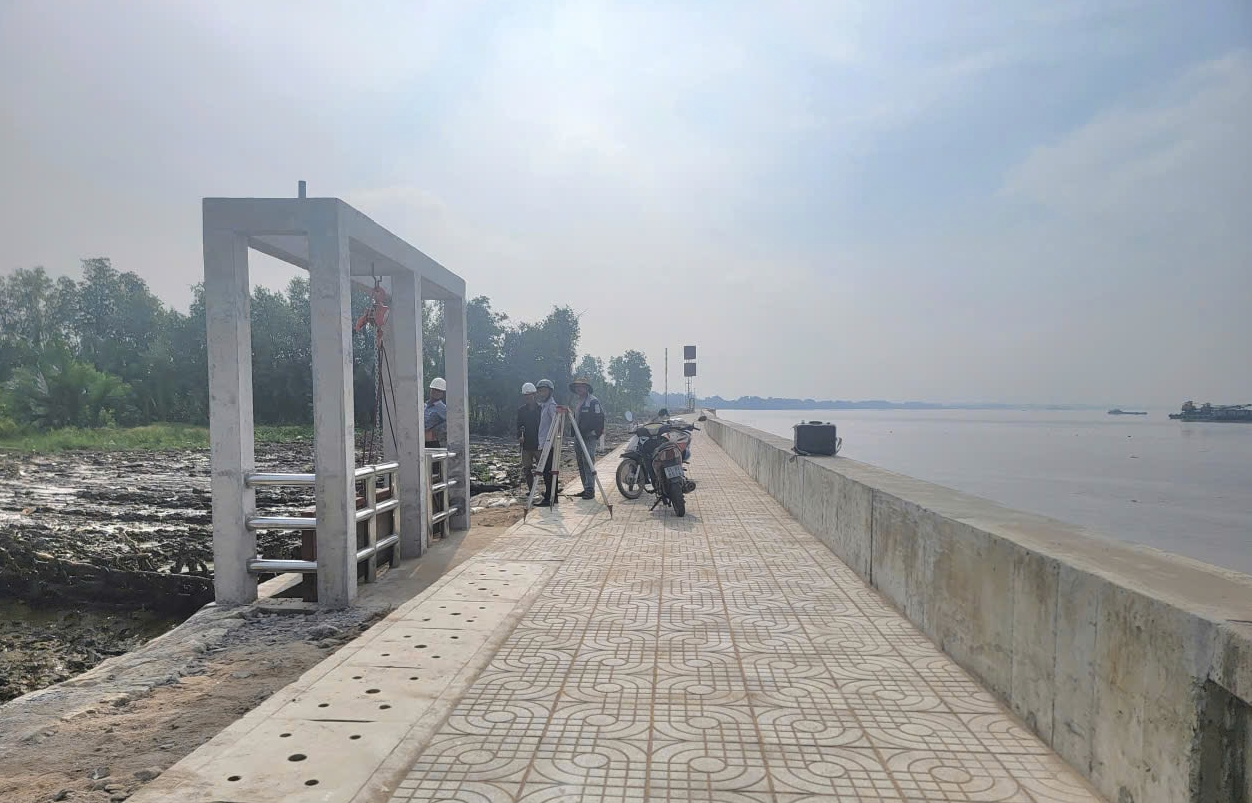
The embankment system in Can Gio District (former). Photo: Quang Phuong
The People's Committee of Ho Chi Minh City has recently issued Decision No. 10/2026/QD-UBND regarding the criteria for ensuring natural disaster prevention and control (NDPC) requirements in the use of construction works and housing by households and individuals within the city. The Decision shall take effect from March 15, 2026.
This Decision replaces previous decisions of the same name issued by the People's Committees of Ho Chi Minh City, Binh Duong, and Ba Ria - Vung Tau (Decision No. 14/2023/QD-UBND dated March 13, 2023; Decision No. 05/2023/QD-UBND dated March 8, 2023; Decision No. 01/2022/QD-UBND dated January 12, 2022; and Decision No. 08/2023/QD-UBND dated February 23, 2023). In cases where legal documents referenced in this Decision are amended, supplemented, or replaced by new documents, the updated versions shall apply.
These regulations apply to households and individuals using construction works and housing, as well as agencies, organizations, and individuals involved in NDPC activities for such properties. NDPC structures include those invested in and built by the State, organizations, or individuals, such as: meteorological, hydrological, oceanographic, and seismic monitoring stations; disaster warning systems; dikes, reservoirs, dams, embankments; anti-flooding, anti-drought, anti-saline intrusion, anti-landslide, anti-subsidence, and anti-flash flood works; lightning protection systems; storm shelters for vessels, multipurpose housing for evacuation, and other facilities serving disaster prevention and control.
The People's Committee of Ho Chi Minh City stipulates general criteria for ensuring NDPC requirements for works and housing, including stages and contents such as: new construction in disaster-affected areas and design/construction requirements in high-risk zones.
Additionally, there are criteria for preparing NDPC equipment and means when a disaster risk is imminent, including: essential items (flashlights, phones, radios, batteries, warm clothing, blankets, first aid kits, medicine, bottled water); stockpiling food and clean drinking water (in tightly sealed containers); and preparing emergency evacuation bags (medical supplies, personal documents, cash, clothing, dry food, medicine, and other essentials) sufficient for 3-7 days. These are intended for use during evacuation or when being isolated by storms, floods, or landslides while awaiting rescue.
Furthermore, preparations should include boats, buoys, rafts, floating objects, reinforcing structures, building mezzanines, and creating rooftop exits. Gas stoves and cylinders must be inspected to prevent the risk of short circuits, fires, or gas leaks during and after natural disasters.
Ho Chi Minh City also regulates that: Construction works and housing must not be built in areas prone to landslides or earthquakes (hilly, mountainous, riverside, coastal, or stream areas). In frequently flooded areas: works and housing must be designed as permanent or semi-permanent structures capable of withstanding forces from water flow or pressure; ensuring the floor level is higher than the peak flood level at the construction site (based on monitoring data from the last 5 years or more).
In areas frequently struck by lightning: works and housing must be equipped with lightning protection systems in accordance with current regulations.
For existing works and housing, when a natural disaster occurs, the regulations require: Strict compliance with all NDPC requirements from competent state authorities. Residents must only leave their homes for other locations or leave shelters to return home after competent authorities announce and confirm that the situation is safe and permit movement. Upon returning home, the safety level of all equipment must be checked before use.